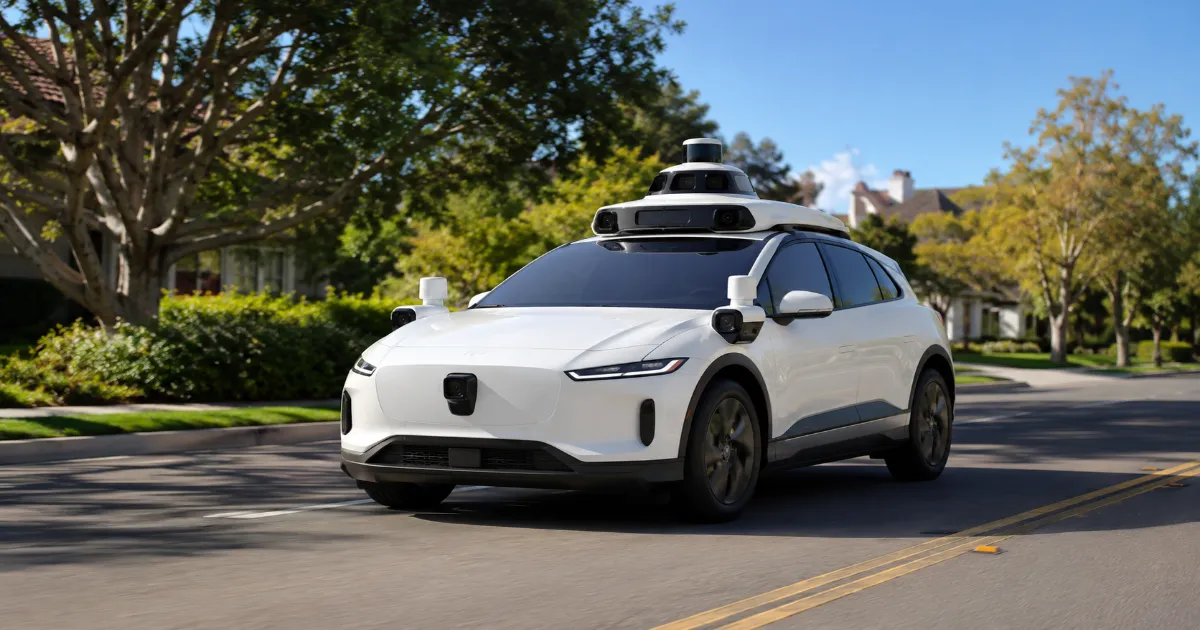
The race to put fully autonomous vehicles on American streets just moved a step closer to reality. Nuro, the self-driving technology company backed by Uber, NVIDIA, and Toyota, has received an updated permit from the California Department of Motor Vehicles to test its driverless Lucid Gravity robotaxis on public roads — without a human safety driver behind the wheel.
The permit, confirmed through recent DMV documents, allows Nuro to operate its autonomous vehicles at speeds up to 45 miles per hour, at any time of day or night, across Santa Clara and San Mateo counties. It marks a significant escalation from the companies’ previous arrangement, which limited autonomous operation to rides involving Uber employees and required a human operator ready to intervene at any moment.
A spokesperson for the companies confirmed to TechCrunch that fully autonomous testing — meaning no human in the driver’s seat under any circumstances — is expected to begin later this year.
The Vehicle at the Centre of It All
The robotaxi itself was unveiled at CES 2026 in January, when Nuro and Uber jointly revealed a design built around the three-row Lucid Gravity electric crossover. The choice of platform is notable. The Lucid Gravity is a premium, spacious SUV, and the robotaxi version is being engineered to match that standard of interior experience.
Riders can expect heated seats they control themselves, a cabin designed for comfort rather than just transportation, and a sensor suite that is as comprehensive as anything currently deployed in the autonomous vehicle industry. The system combines high-resolution cameras, lidar sensors, and radar, with a roof-mounted LED display rounding out the exterior design.
All of that sensing hardware feeds into Nuro’s self-driving software stack, which the company has been refining through years of real-world testing — first with its compact R3 Nuro Robot delivery vehicle, which already holds a California DMV permit for driverless deliveries, and now with the larger Lucid-based passenger platform.
Uber’s Bigger Ambition
This approval is not just about Nuro. It sits inside a considerably larger strategic plan that Uber has been assembling for its autonomous future. The ride-hailing giant has set a target of deploying 100,000 driverless vehicles across the United States, and up to 35,000 of those are intended to run on Nuro’s self-driving technology.
That 35,000 figure is itself an upgrade. Lucid Motors revealed as part of its first-quarter 2026 earnings release that Uber had increased its vehicle order from an initial 20,000 to 35,000 units. At the same time, Uber raised its total investment in Lucid to $500 million — a substantial financial commitment that signals genuine confidence in the timeline and the technology.


Lucid, for its part, said it expects the robotaxi service to launch “later this year.” That aligns with the timeline Nuro and Uber have been communicating to the public, though several regulatory steps remain before paying passengers can climb into one of these vehicles without a human driver present. The companies will still need to secure a ride-hailing permit and a separate DMV deployment permit before commercial operations can begin.
Tokyo, Too
California is not the only place Nuro has been preparing for this moment. The company has also been conducting autonomous vehicle tests in Tokyo, operating the Lucid Gravity platform with human backup drivers as a precautionary measure. Japan represents a different regulatory environment and a different set of road conditions, and Nuro’s presence there suggests the company is building toward something that extends well beyond a single American market.
The Tokyo testing also reflects the influence of NVIDIA in Nuro’s development. NVIDIA’s computing hardware underpins a significant portion of the autonomous vehicle industry’s training and inference capabilities, and its backing of Nuro is part of a broader push to establish its technology as the standard platform for self-driving systems.
Where This Fits in the Broader Race
Waymo, the Alphabet-owned autonomous vehicle company, continues to operate robotaxi services in San Francisco, Los Angeles, and Phoenix, and has been the dominant player in terms of actual commercial rides delivered. Tesla has announced its own robotaxi ambitions. Amazon-backed Zoox is developing a purpose-built autonomous vehicle. The field is crowded, competitive, and moving fast.
What Nuro and Uber bring to this contest is a combination of Uber’s existing ride-hailing infrastructure — its app, its user base, its regulatory relationships — and Nuro’s focused expertise in building and operating autonomous systems. The Lucid partnership adds a premium vehicle platform that is designed to attract riders rather than merely transport them.
The new California permit does not mean driverless Uber rides are imminent. But it does mean the testing phase is entering its most serious stage. What happens on the roads of Santa Clara and San Mateo counties over the coming months will go a long way toward determining whether this particular robotaxi partnership can make good on its considerable promises.